The Evolution of Focused Shockwave Therapy: From Kidney Stones to Healing Joints
Modern medicine often advances in unexpected ways. One of the most fascinating examples is focused shockwave therapy, a technology that began as a treatment for kidney stones and has evolved into one of the most promising non-invasive therapies for musculoskeletal pain and injury.
Today, focused shockwave therapy is used to help stimulate healing in tendons, ligaments, fascia, muscles, and even bone. But its story began in a very different place.
The Origin of Shockwave Therapy
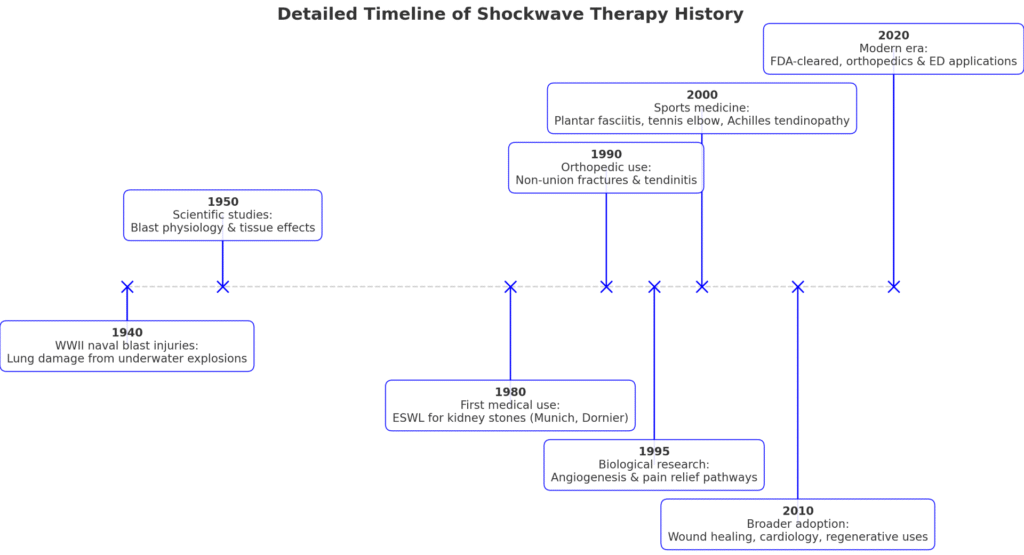
Focused shockwave technology was first developed in the 1970s in Germany. Physicians and engineers were looking for a way to treat kidney stones without surgery.
They discovered that highly focused acoustic waves—essentially powerful sound waves—could be directed through the body and concentrated onto a small target. When these waves reached the kidney stone, they caused the stone to break apart into small fragments that could pass naturally through the body.
This procedure became known as Extracorporeal Shockwave Lithotripsy (ESWL) and revolutionized kidney stone treatment around the world.
But something interesting happened during early treatments.
Doctors began noticing that the bone and surrounding tissues exposed to the shockwaves appeared to respond biologically. Instead of being damaged, the tissues often showed signs of improved healing and regeneration.
This observation opened the door to an entirely new area of medicine.
The Expansion into Orthopedics
By the 1990s, researchers began studying whether focused shockwaves could help treat chronic musculoskeletal conditions—particularly injuries that had stopped healing normally.
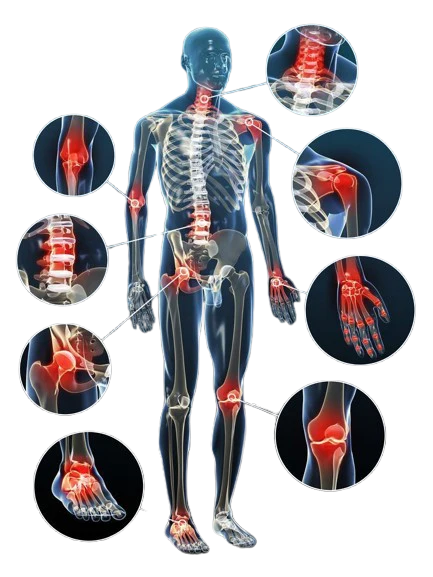
Over time, clinical studies showed that focused shockwave therapy could be helpful for conditions such as:
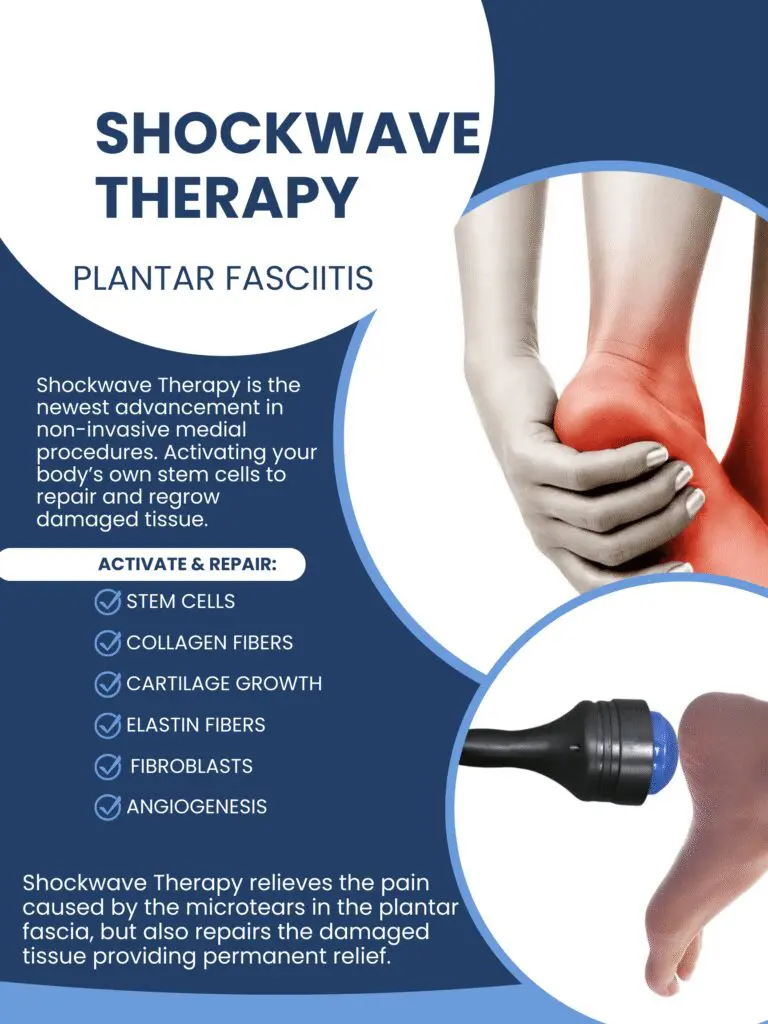
- Plantar fasciitis
- Achilles tendon pain
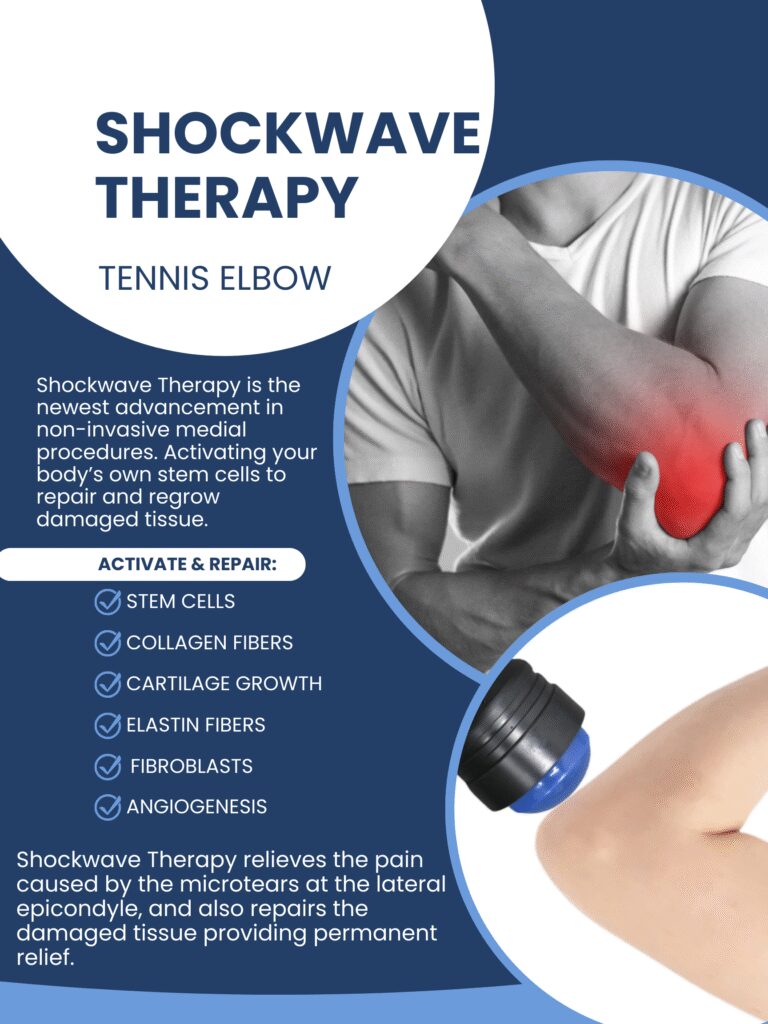
- Tennis elbow
- Shoulder tendon injuries
- Patellar tendon problems
- Hip and hamstring tendinopathy
- Chronic muscle trigger points
Today, focused shockwave therapy is widely used in orthopedics, sports medicine, rehabilitation, and chiropractic care to stimulate healing in stubborn injuries.
Instead of masking pain with medication, the goal is to encourage the body to repair damaged tissue.
How Focused Shockwave Therapy Stimulates Healing
To understand how shockwave therapy works, it helps to think about how the body normally heals.
When tissue is injured, the body sends signals that increase blood flow, activate repair cells, and rebuild damaged structures. However, in some chronic injuries, this healing process becomes stalled or incomplete.
Focused shockwave therapy helps restart that process.
When acoustic waves enter the injured tissue, they create small mechanical signals that stimulate biological responses inside the cells. These signals trigger several important healing mechanisms.
1. Improved Blood Flow (Angiogenesis)
One of the first responses to shockwave therapy is an increase in blood vessel formation, a process called angiogenesis.
New microscopic blood vessels begin to develop in the injured tissue, improving circulation. Better circulation means:
- More oxygen delivery
- More nutrients for repair
- Better removal of inflammatory waste products
This improved blood supply helps tissues recover and function more normally.
2. Activation of Repair Cells and Stem Cells
Focused shockwaves also stimulate the activation of stem cells and other repair cells within the body.
Stem cells are special cells that can develop into many different types of tissue cells. When activated, they help rebuild damaged structures such as tendons, ligaments, and connective tissue.
Shockwave therapy helps signal the body that an injured area needs attention, encouraging these repair cells to migrate to the region and begin rebuilding tissue.
3. Remodeling of Degenerated Tissue
Many chronic injuries involve tissue that has become degenerative rather than actively inflamed. This means the tissue has slowly weakened or deteriorated over time.
Shockwave therapy helps stimulate a process called tissue remodeling.
During remodeling:
- Old, damaged tissue is broken down
- New collagen fibers are produced
- The structure of the tissue becomes stronger and more organized
Over time, this process can improve the health and resilience of the affected tissue.
Supporting the Body’s Natural Healing Ability
One of the most exciting aspects of focused shockwave therapy is that it works with the body’s natural biology rather than against it.
Instead of suppressing symptoms, shockwave therapy helps stimulate the body’s own healing systems by:
- Improving circulation
- Activating repair cells
- Encouraging tissue regeneration
For many patients dealing with chronic pain or stubborn injuries, this provides a non-invasive option that can help restore function and promote long-term recovery.
The Future of Regenerative Orthopedic Care
As research continues, focused shockwave therapy is becoming an important tool in regenerative musculoskeletal medicine. Scientists are continuing to study its effects on cellular signaling, stem cell activation, and tissue repair.
What began as a treatment for kidney stones has now evolved into a powerful therapy that can help patients recover from many common orthopedic conditions—without surgery and without medications.
For patients seeking a natural approach to healing, focused shockwave therapy represents an exciting advancement in modern care. Call our office today (541) 318-8627 to schedule your appointment today!