
Understanding Plantar Fasciitis
Why Heel Pain Happens — And What Actually Helps
By Brad Welker, DC, DIANM
Bend Spinal Care – Bend, Oregon
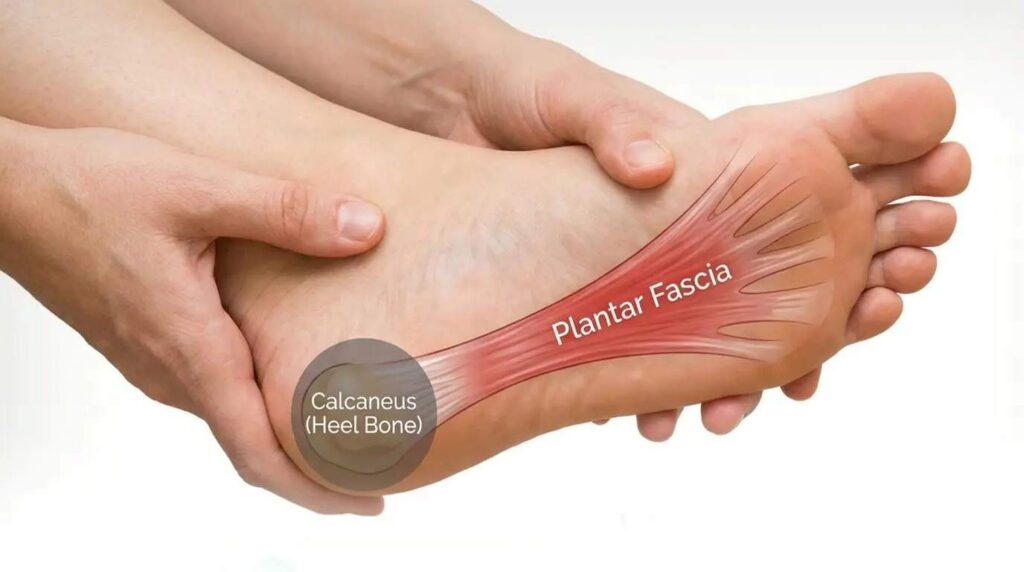
If you’ve ever stepped out of bed in the morning and felt a sharp pain in the bottom of your heel, you’re not alone. One of the most common causes of heel pain is a condition called plantar fasciitis.
Many patients describe it as:
- Sharp heel pain
- Pain with the first steps in the morning
- Pain after standing or walking
- Tightness in the arch
- Burning or aching in the heel
- Pain that improves slightly with movement but returns later
While plantar fasciitis is common, not all heel pain is actually plantar fasciitis. Proper diagnosis is important because several other conditions can mimic it.
What Is the Plantar Fascia?
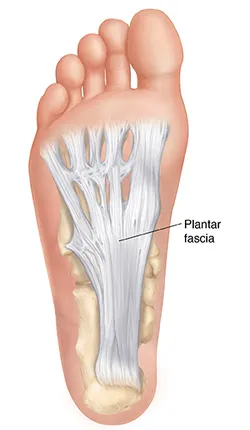
The plantar fascia is a thick band of connective tissue on the bottom of the foot that runs from the heel bone (calcaneus) to the toes.
It functions like:
- A shock absorber
- A stabilizer for the arch
- A spring that stores and releases energy during walking
Every time we walk, run, jump, or stand, the plantar fascia experiences stress.
What Causes Plantar Fasciitis?
Plantar fasciitis is usually caused by repetitive overload of the plantar fascia over time.
Rather than a simple “inflammation,” research suggests plantar fasciitis often becomes more of a degenerative and overload condition involving:
- Micro-tearing (small tears occurring over time)
- Tissue degeneration
- Thickening of the fascia
- Poor tissue healing
- Ischemia (lack of blood flow)
This is why many researchers now use the term:
“Plantar Fasciopathy” -pathy indicates a disease or structural change, while -itis refers specifically to inflammation.
The problem often develops because the foot is being overloaded faster than the tissue can recover.
Common Contributing Factors
Several factors may increase stress on the plantar fascia:
- Tight calf muscles
- Limited ankle mobility
- Flat feet or high arches
- Poor footwear
- Sudden increase in activity
- Running or jumping sports
- Standing on hard surfaces
- Excess body weight
- Weak foot or hip stabilizers
- Altered walking mechanics
In some patients, the issue is not just the foot itself — it may involve the entire lower extremity mechanics.
Why Does It Hurt Most in the Morning?

This is one of the classic symptoms.
During sleep:
- The foot relaxes
- The plantar fascia shortens slightly
When you first stand:
- The tissue is suddenly stretched and loaded
- Micro-irritation occurs again
This creates the familiar:
“First-step pain”
Not All Heel Pain Is Plantar Fasciitis

Several other conditions can mimic or contribute to heel pain.
This is why proper diagnosis matters.
Other Conditions We Evaluate
1. Tarsal Tunnel Syndrome
This occurs when a nerve becomes compressed near the inside of the ankle.
Symptoms may include:
- Burning
- Tingling
- Numbness
- Electrical pain
- Pain radiating into the arch or toes
Unlike plantar fasciitis, nerve pain may feel:
- Sharp
- Burning
- Tingling
- Electrically sensitive
2. Calcaneal Fat Pad Atrophy
The heel has a natural shock-absorbing fat pad.
Over time, this pad can thin or lose cushioning.
Patients often describe:
- Deep bruised feeling
- Pain directly under the heel
- Pain with prolonged standing
- Pain on hard surfaces
This condition is often mistaken for plantar fasciitis.
3. Arthritis
Arthritis in the foot or ankle can contribute to:
- Stiffness
- Joint pain
- Reduced mobility
- Altered walking mechanics
This can secondarily overload the plantar fascia.
4. Nerve Irritation from the Low Back
Sometimes heel pain may actually relate to:
- Lumbar radiculopathy
- Sciatic nerve irritation
- Peripheral nerve irritation
This is another reason a complete orthopedic and neurological examination is important.
How We Diagnose Plantar Fasciitis?

Diagnosis begins with:
- A detailed history
- Orthopedic examination
- Functional movement evaluation
- Foot and gait assessment
- Neurological examination when needed
We evaluate:
- Location of tenderness
- Fascia tension
- Calf tightness
- Foot mechanics
- Nerve involvement
- Joint mobility
- Functional movement patterns
Imaging may sometimes be used when necessary:
- X-rays
- Ultrasound imaging
- MRI
Research shows that plantar fasciitis often demonstrates:
- Thickening of the plantar fascia
- Tissue degeneration
- Loss of normal tissue organization
Best Treatment Options

Treatment depends on:
- Severity
- Duration
- Biomechanics
- Tissue quality
- Activity demands
The goal is not simply reducing pain — it is improving the way the foot functions and heals.
Focused ShockWave Therapy (F-ESWT)
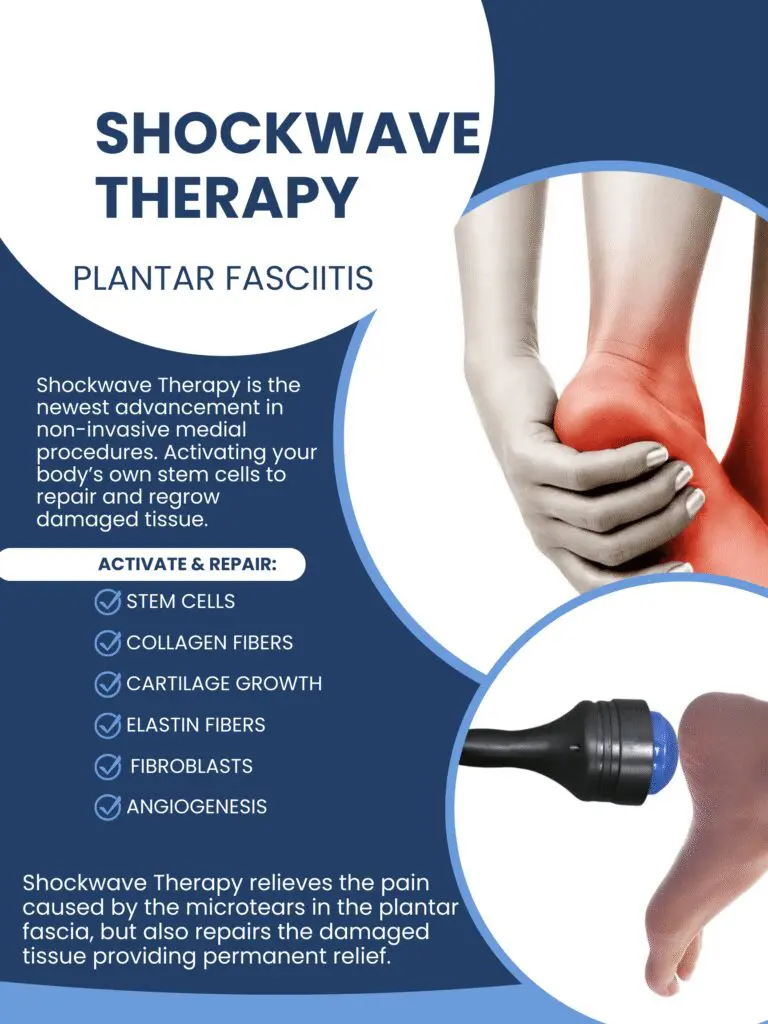
One of the most effective non-surgical treatments for chronic plantar fasciitis is:
Focused Extracorporeal ShockWave Therapy (F-ESWT)
This treatment uses focused acoustic energy to stimulate tissue healing.
Research suggests Focused ShockWave Therapy may help:
- Stimulate circulation
- Improve tissue regeneration
- Reduce chronic pain
- Improve collagen remodeling
- Break chronic pain cycles
Multiple studies and systematic reviews have shown improvement in:
- Pain reduction
- Function
- Long-term outcomes in chronic plantar fasciitis
Especially when symptoms have persisted for months.
Other Conservative Treatments May Include
Depending on the patient, treatment may also involve:
- Stretching programs
- Foot and ankle mobility work
- Soft tissue therapy
- Massage therapy
- Orthotics or footwear changes
- Strengthening exercises
- Calf flexibility work
- Taping
- Activity modification
- Ultrasound therapy
- Manual therapy
Every patient is different.
Why Some Cases Become Chronic
Many chronic cases continue because:
- The underlying mechanics were never corrected
- The tissue never fully healed
- The foot continues to be overloaded
- The diagnosis was incomplete
Simply masking pain does not always resolve the underlying dysfunction.
Research & Literature

Research has demonstrated:
- Plantar fasciitis is often degenerative rather than purely inflammatory
- Tight calf musculature and limited ankle dorsiflexion increase plantar fascia loading
- ShockWave Therapy has strong evidence for chronic plantar fasciitis
- Biomechanics and tissue overload play major roles
Several systematic reviews support Focused ShockWave Therapy as an effective non-surgical treatment option for chronic plantar fasciopathy.
Final Thoughts
Heel pain can be frustrating and limiting, but many patients improve significantly with proper diagnosis and treatment.
The key is identifying:
- What tissue is actually involved
- Why it became overloaded
- What functional problems are contributing
At Bend Spinal Care, we focus on identifying the true source of the problem so treatment can be individualized and effective.

Evidence. Experience. Empathy.
225 NE Franklin Ave, Suite 2 • Bend, Oregon
📞 541-318-8627
🌐 Bend Spinal Care