
Is Your Brain Hearing Your Spine Correctly?

Healthy Movement Begins with Healthy Communication
By Brad Welker, DC, DIANM

Most people think that their spine simply supports their body.
But your spine does something much more important.
It constantly communicates with your brain.
Every second of every day, thousands of tiny receptors located in your joints, muscles, ligaments, discs, and fascia send information to your brain about:
- Where your body is in space
- How much force your muscles should produce
- Your posture
- Your balance
- Your movement
- Whether your body is safe or potentially injured
This process is called sensorimotor processing, and it is one of the most important jobs of your nervous system.
Think of It Like GPS

Imagine driving with a GPS that is constantly giving incorrect directions.
Eventually, you would:
- Turn too early.
- Brake too late.
- Miss your destination.
- Use more energy than necessary.
Your body works the same way.
If your brain receives inaccurate information from your joints, it may begin making less accurate movement decisions.
Over time, this can contribute to:
- Pain
- Stiffness
- Poor balance
- Muscle weakness
- Compensation patterns
- Increased wear and tear
What Happens with Degeneration?

As we age—or after injuries—the tissues in our spine can change.
Examples include:
- Disc degeneration
- Arthritis
- Joint stiffness
- Ligament injury
- Muscle guarding
While these structural changes are important, something else is happening at the same time.
The tiny motion sensors in these tissues may begin sending less accurate information to the brain.
The result?
Your brain is trying to control movement using lower-quality information.
Recent research suggests chronic spinal pain is associated with changes in proprioception (the body’s awareness of position) and sensorimotor integration—the brain’s ability to combine sensory information and produce coordinated movement.
The Brain Learns from Repetition
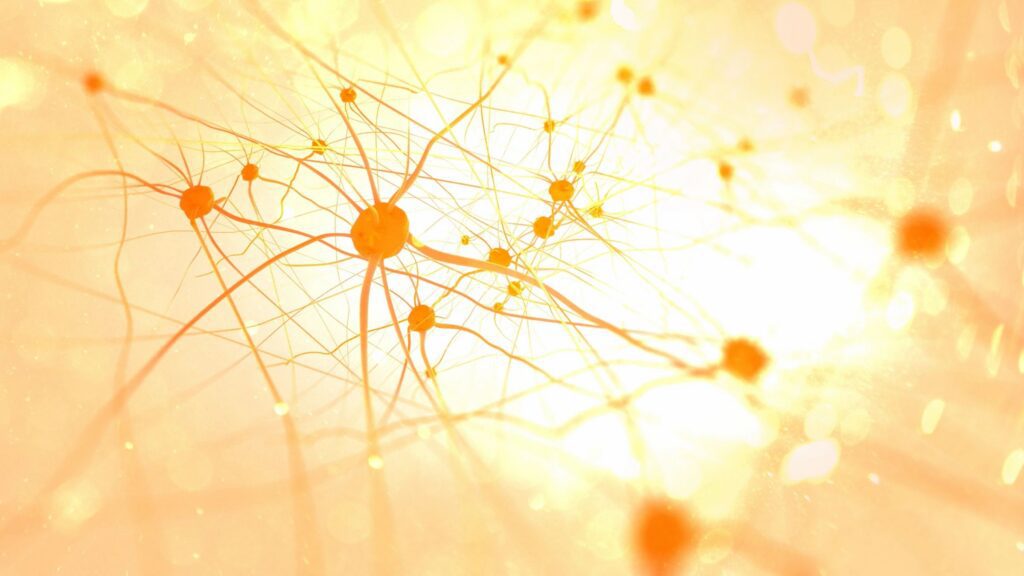
The nervous system is constantly adapting.
If a joint stops moving normally for weeks or months, the brain begins accepting that altered movement as the “new normal.”
This is called neuroplasticity—the brain’s ability to change based on the information it receives.
Sometimes that change is helpful.
Sometimes it isn’t.
Poor movement patterns can become deeply ingrained even after the original injury has healed.
What Does Chiropractic Manipulation Do?

Many people think an adjustment simply “puts a bone back into place.”
Modern research suggests something much more interesting may be happening.
A spinal adjustment provides a rapid, specific mechanical stimulus to the joints and surrounding tissues.
Those tissues contain thousands of sensory receptors.
When they are stimulated, they send a burst of information to the brain.
Researchers have demonstrated changes in:
- Proprioception
- Sensorimotor integration
- Muscle activation
- Balance
- Brain activity following spinal manipulation.
In other words, an adjustment may help the brain receive clearer information from the spine.
Better Information Leads to Better Movement

Think of your brain as the conductor of an orchestra.
If the musicians are playing from blurry sheet music, the performance suffers.
When the information becomes clearer, the conductor can coordinate the orchestra more effectively.
Your body works in much the same way.
Better sensory input can contribute to:
- Improved movement
- Better coordination
- More efficient muscle activation
- Better balance
- Less protective muscle guarding
What Does the Research Show?

Several recent studies have shown that spinal manipulation can influence sensorimotor processing.
For example:
- A 2024 randomized trial found that manipulation directed at clinically relevant dysfunctional spinal segments produced measurable changes in sensorimotor integration compared with manipulation delivered to non-relevant segments.
- A 2025 randomized controlled trial found that lumbar spinal manipulation altered proprioceptive processing and improved the way the brain weighted sensory information from the lumbar spine for balance and movement, supporting the concept that manual therapy can normalize altered sensory input.
- A 2025 living review concluded that manual therapy appears to produce measurable responses at peripheral tissues, the spinal cord, and the brain, although researchers continue to investigate exactly which mechanisms are most responsible for clinical improvement.
Why This Matters
Our goal is not simply to reduce pain.
Our goal is to help restore healthier communication between your body and your brain.
When the brain receives more accurate information, it can make better movement decisions.
Better movement often leads to:
- Less unnecessary stress on joints
- Improved muscle coordination
- Better function
- Greater confidence with daily activities
Every Patient Is Different

Not everyone with back or neck pain needs the same treatment.
Some people benefit from:
- Chiropractic adjustments
- Focused ShockWave Therapy
- Rehabilitation exercises
- Massage therapy
- Spinal decompression
- Activity modification
- Surgery
- Acupuncture
Treatment should always be based on your diagnosis, your examination, and your individual goals.
The Bottom Line

Pain is only part of the story.
Your spine is constantly talking to your brain.
When degeneration, injury, or stiffness interfere with that conversation, movement can become less efficient and more protective.
Helping restore healthy communication between the spine and the brain is one reason chiropractic care may improve not only pain, but also movement, balance, and function.